
Hikers, hunters & outdoor adventurers
Don't let a sprain become a statistic
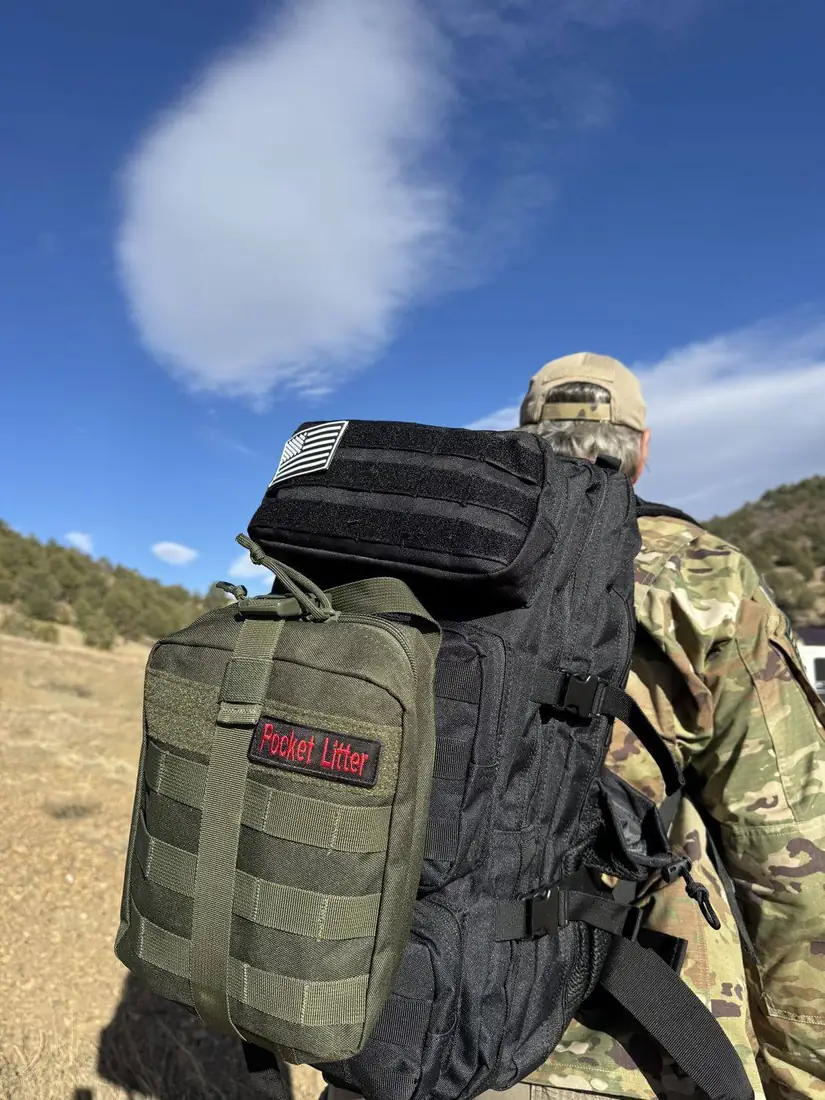
Buddy rescue in your pack. 2.5 lb. Spine stabilization. Load tested to 400 lb. The Pocket Litter lets you move an injured partner to a spot where a helicopter or search and rescue team can reach you.
The backcountry doesn't care about your plans
Miles from the trailhead, a small injury is a big problem
You love a long day out. You also know the risks. A twisted ankle, a fall on scree or a back injury eight miles from the truck can turn a good day into a dangerous one, fast.
Most rescue litters are far too heavy to carry "just in case." A tarp or improvised drag gives the spine no protection. You need something light enough to live in your pack that does the job when it counts.
The Pocket Litter weighs about as much as a full 1-liter water bottle and packs smaller than a paperback. It does not replace calling for help. It is how you get your partner out of the creek bed, off the ledge or down to the clearing where help can reach you.
Why adventurers carry it
- Pack-weight friendly. 2.5 lb, about the weight of a full 1-liter water bottle.
- Pack pocket ready. Folds to 6 × 9.25 × 1.75 in. Fits a daypack or side pocket.
- 400 lb load tested. Handles your partner and their gear.
- Built for one rescuer. Move a partner over scree, roots, snow or stairs.
- Real spine protection. Stiffeners give stabilization soft drag sheets can't.
How it works
If your partner can't walk out
- Call for help firstSatellite messenger, PLB or phone. Give your location.
- DeployPull the Pocket Litter from your pack and unfold it.
- SecureGet your partner on and strap in. The hub and stiffeners support the spine.
- Move to safetyDrag to a safer, more reachable spot: out of water, off the slope, to a clearing for a helicopter or the trail for the SAR team.
Building your kit? Read what to put in a hiking first aid kit when help is hours away.
Use cases
Who packs a Pocket Litter
Day hikes and thru-hikes
Carry for partner extraction when you are far from the trailhead.
Backcountry hunts
Steep country, long hauls and a hunting partner who can't walk out.
Approaches and descents
Move a partner off talus and scree to a spot a helicopter can reach.
Groups in remote terrain
One more tool in the leader's kit for the day someone gets hurt.
Outdoor FAQ
Before you pack it
Can I use the Pocket Litter by myself if I get hurt?
No. The Pocket Litter is designed for one-to-one or one-to-many drag or carry extraction, not self-rescue. It is for moving a partner, or for your partner to move you.
Is it a one-time use item?
No. After use, wash it down, inspect the webbing and refold it for your next trip.
Does it replace calling for help?
No. It is your bridge to safety. It lets you move a patient to a casualty collection point or a more accessible area where a helicopter or search and rescue team can reach you.
How do I pack it?
It folds flat to 6 × 9.25 × 1.75 in. It fits a cargo pocket or pack side pocket, or lashes to the outside of your pack. It ships in a MOLLE carry bag, red or OD green, that mounts on the outside of a pack.
How heavy is it compared to other backcountry rescue gear?
At 2.5 lb it weighs about as much as a full 1-liter water bottle. Full rescue litters built for team carries typically weigh many times that and are too bulky for a daypack.
Add it to your kit today
Don't leave your safety, or your partner's, to chance.